
Results
EMMA is building a complete package—training, tools, and guidelines—to help small and medium-sized municipalities coordinate citizen volunteers safely and effectively during climate-related disasters.
What EMMA will deliver
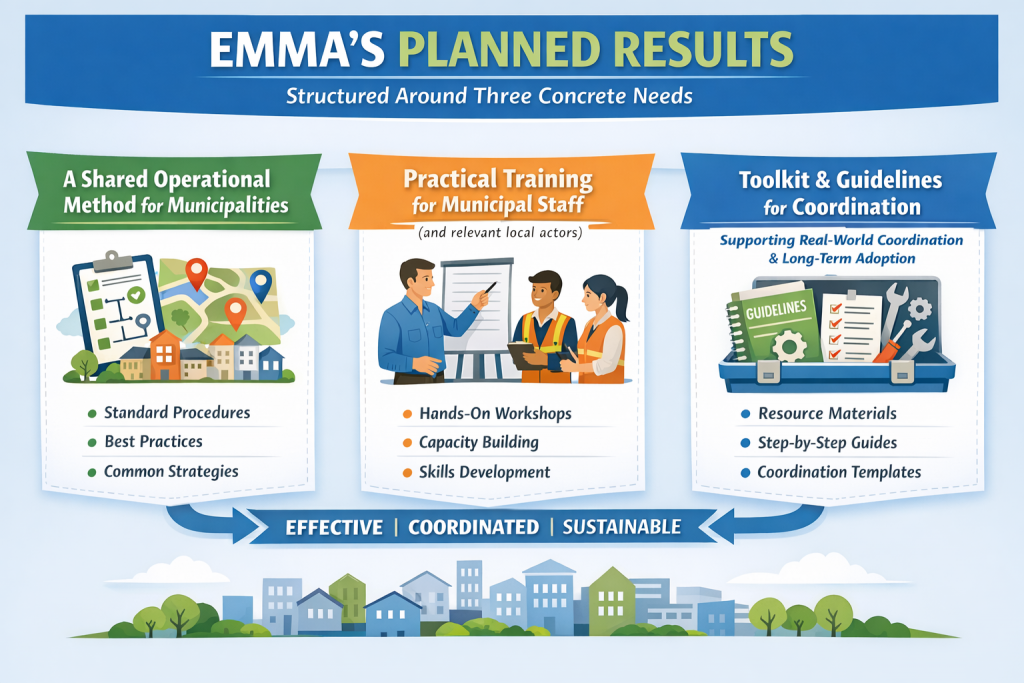
EMMA’s planned results are structured around three concrete needs:
- A shared operational method for municipalities
- Practical training for municipal staff (and relevant local actors)
- A toolkit and guidelines that support real-world coordination and long-term adoption
Result 1 — EMMA Methodological Intervention Model
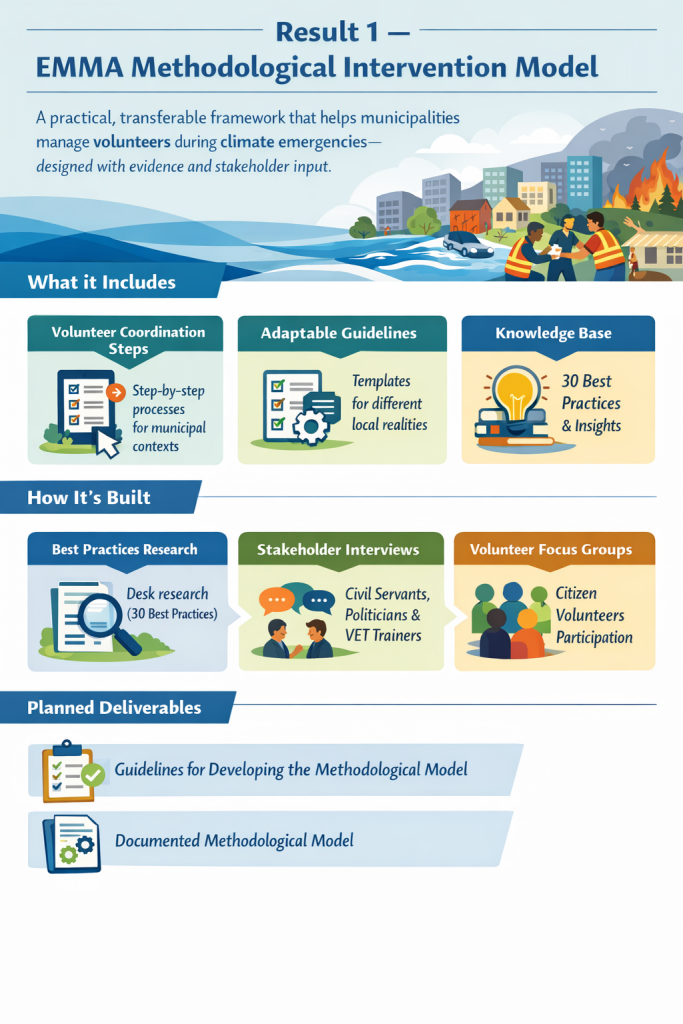
What it is: A practical, transferable framework that helps municipalities manage volunteers during climate emergencies—designed with evidence and stakeholder input.
What it includes (planned):
- Step-by-step volunteer coordination processes for municipal contexts
- Templates and adaptable guidelines for different local realities
- A knowledge base built from 30 documented best practices, interviews, and volunteer focus groups
How it’s built (planned activities):
- Desk research and documentation of best practices (5 per partner; 30 total)
- Interviews with civil servants, politicians, and VET trainers
- Participatory focus groups with citizen volunteers
Planned deliverables:
- Guidelines for developing the methodological model
- Documented methodological model
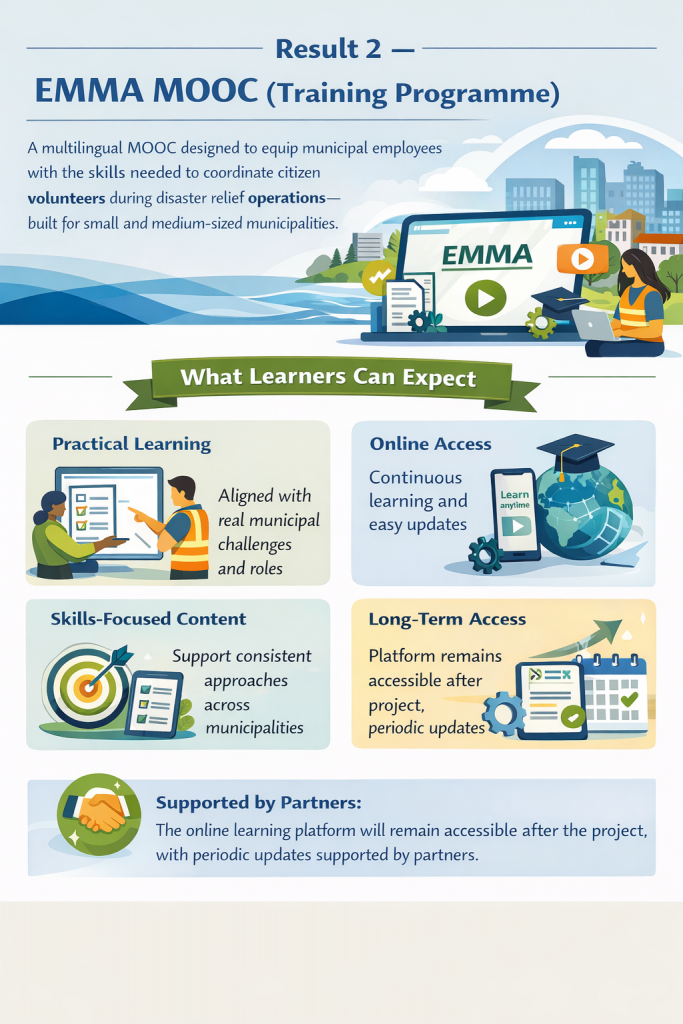
Result 2 — EMMA MOOC (Training Programme)
What it is: A multilingual MOOC designed to equip municipal employees with the skills needed to coordinate citizen volunteers during disaster relief operations—built for small and medium-sized municipalities.
What learners can expect (planned):
- Practical learning aligned with real municipal challenges and roles
- Online access to ensure continuous learning and easy updates
- Skills-focused content to support more consistent approaches across municipalities
Long-term access: The online learning platform will remain accessible after the project, with periodic updates supported by partners.
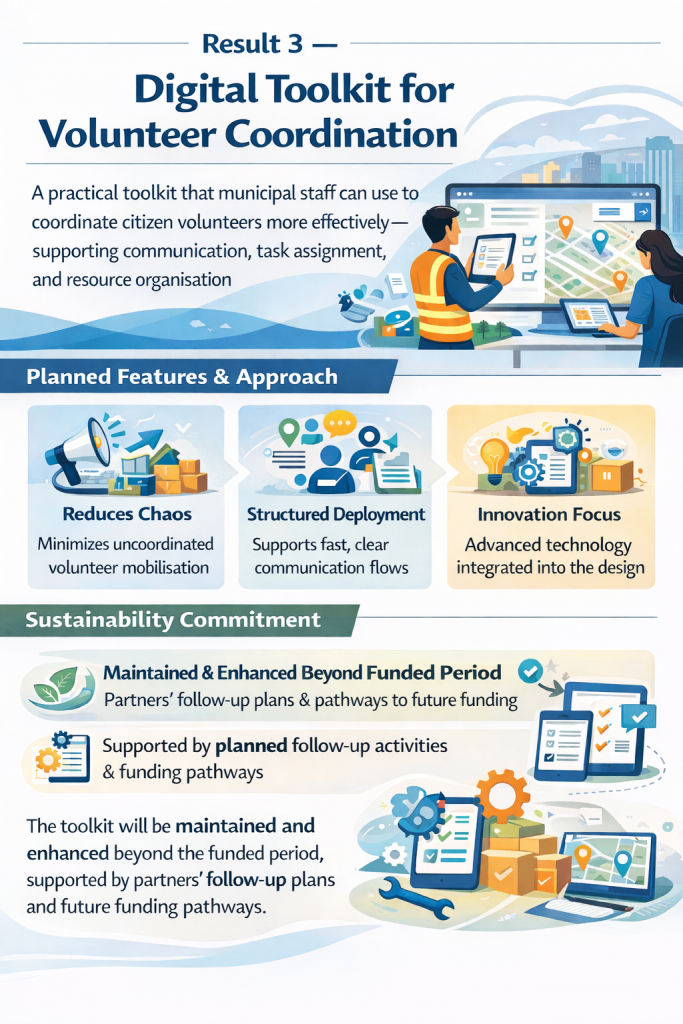
Result 3 — Digital Toolkit for Volunteer Coordination
What it is: A practical toolkit that municipal staff can use to coordinate citizen volunteers more effectively—supporting communication, task assignment, and resource organisation.
Planned features and approach:
- Designed to reduce chaos from uncoordinated volunteer mobilisation
- Supports fast, structured deployment and clearer communication flows
- Developed with an innovation focus (including advanced technology elements referenced in the project design)
Sustainability commitment: The toolkit will be maintained and enhanced beyond the funded period, supported by partners’ follow-up plans and future funding pathways.
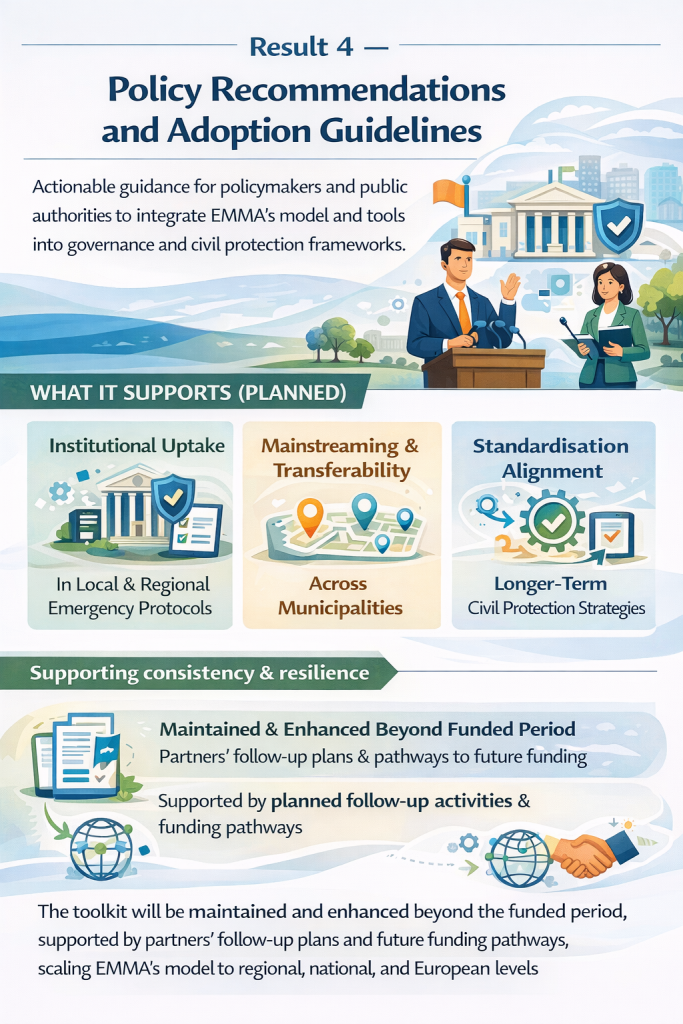
Result 4 — Policy Recommendations and Adoption Guidelines
What it is: Actionable guidance for policymakers and public authorities to integrate EMMA’s model and tools into governance and civil protection frameworks.
What it supports (planned):
- Institutional uptake in local and regional emergency protocols
- Mainstreaming and transferability across municipalities
- Longer-term standardisation and alignment with broader civil protection strategies
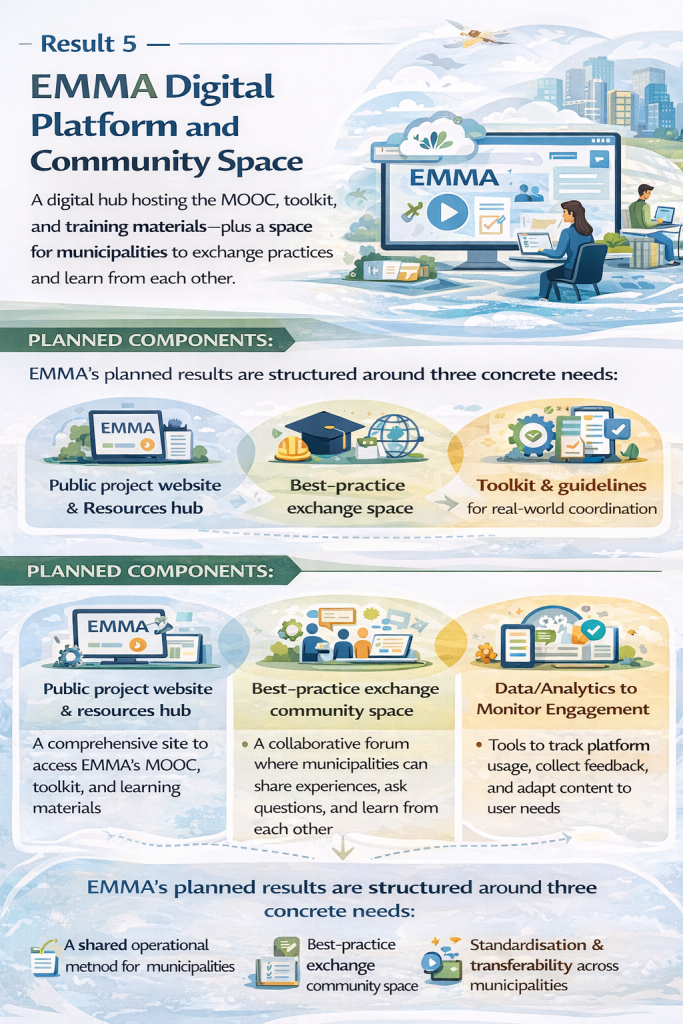
Result 5 — EMMA Digital Platform and Community Space
What it is: A digital hub hosting the MOOC, toolkit, and training materials—plus a space for municipalities to exchange practices and learn from each other.
Planned components:
- Public project website and resources hub
- Best-practice exchange community space
- Data/analytics to monitor engagement and improve content
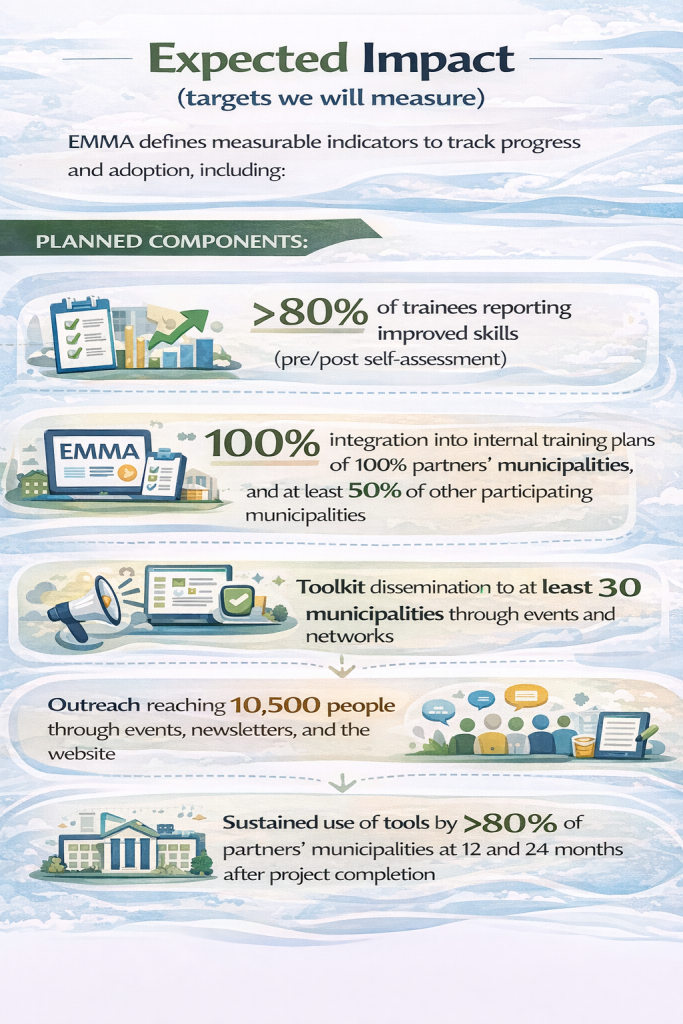
Expected impact (targets we will measure)
EMMA defines measurable indicators to track progress and adoption, including:
- ≥80% of trainees reporting improved skills (pre/post self-assessment)
- MOOC integration into internal training plans of 100% partners’ municipalities, and at least 50% of other participating municipalities
- Toolkit dissemination to at least 30 municipalities through events and networks
- Outreach reaching 10,500 people through events, newsletters, and the website
- Sustained use of tools by ≥80% of partners’ municipalities at 12 and 24 months after project completion