Volunteers at the Frontline of Floods: Denmark and Valencia Compared
In the context of flood events, spontaneous and organized volunteer groups consistently constitute the initial response capacity. A central issue, however, is the extent to which these actors possess adequate preparedness and organizational structures. The EMMA project systematically investigates this challenge at the European level. Two recent empirical cases—the formally structured community-based model in Denmark and the extreme DANA flood event in Spain in 2024—provide contrasting yet complementary insights into volunteer engagement and disaster management practices.🇩🇰 Denmark: Structure Before the Storm
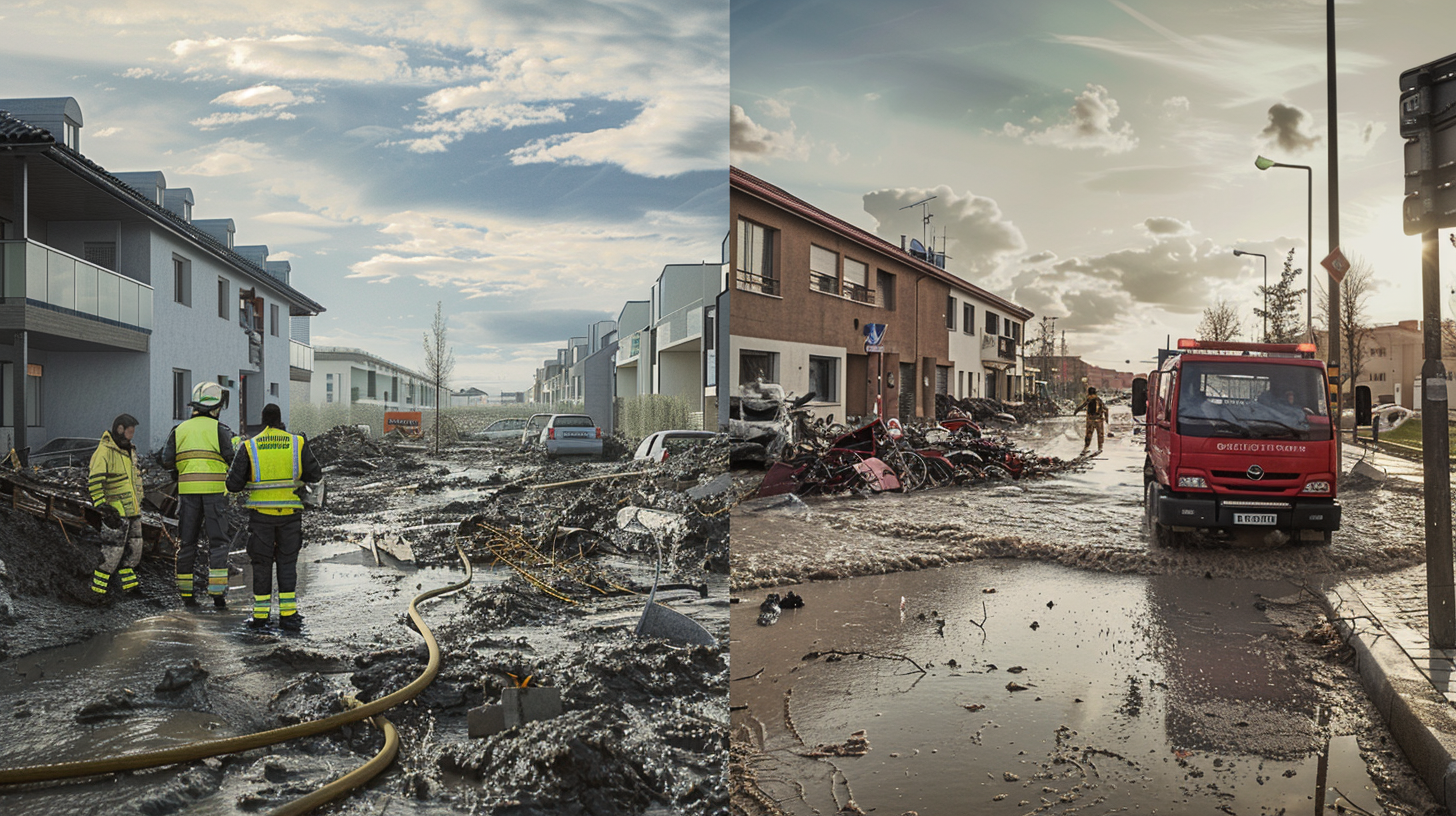
In Jyllinge (Roskilde Municipality), repeated coastal flooding reshaped cooperation between citizens and authorities. The result is the internationally recognised Roskilde Model: volunteers get roles in advance, train with firefighters, and use social media to coordinate before floods. The local fire station guides rather than controls, and city councils are partners from the start. Digital tools like SCALGO Live give municipalities real-time flood risk data, enabling early, transparent planning with citizens. Denmarks national policy explicitly treats citizens as co-producers of safety, making structured volunteerism possible.🇪🇸 Valencia, Spain: Solidarity Without a Framework
On 29 October 2024, a DANA storm devastated the Valencia region: 229 deaths, 75,000 people affected, 130,000 homes damaged. The citizen response was overwhelming — thousands arrived within hours by foot, bicycle, and tractor. But without pre-established coordination, this wave of solidarity caused bottlenecks, duplication of tasks, and safety risks in the critical first 72 hours.
The Valencian Volunteer Platform (PVCV) stepped in to organise the response. A citizen-built app, Ayuda Terreta, emerged spontaneously to match helpers with specific needs. Powerful innovations — but born from necessity, not preparation.
Key Differences
- Preparation: Denmark coordinates before the crisis; Valencia organised during it
- City council role: proactive partner (Denmark) vs. reactive and overwhelmed (Valencia)
- Volunteer model: pre-planned roles vs. mass spontaneous response
- Digital tools: institutional planning platforms vs. citizen-built grassroots apps
What EMMA Can Do
These two cases are not opposites — they are a roadmap. EMMA partners should support municipalities to build volunteer registers and clear role protocols before disasters occur, share digital coordination tools across borders, and transfer the hard-won knowledge from Valencia’s DANA Manual and Denmark’s Roskilde Model to communities across Europe.
When the water rises, citizens will always respond. The EMMA project exists to make sure they are ready.
Keywords: flood resilience · volunteer coordination · disaster preparedness · DANA 2024 · Roskilde Model · climate emergency · community response
EMMA Project · emma-project.eu · Co-funded by the Erasmus+ Programme of the European Union